How Many Humidifiers Does Your House Need?
Most homes need one humidifier for each separate room or open area that needs more moisture. For how many humidifiers you need, check humidity in the rooms you use, then match each low-reading area to a unit’s coverage and your home’s layout.
On this page (9 sections)
- How many humidifiers do I need for my house?
- Can one humidifier cover a whole house?
- When should you use separate humidifiers?
- How do you tell whether another humidifier is needed?
- What humidity should you aim for?
- Where should you place each humidifier?
- How do you set up and care for multiple humidifiers?
- What mistakes can lead you to buy too many humidifiers?
- How many humidifiers do I need? Use this decision rule
Most homes need one humidifier for each separate room or open area that needs more moisture. To decide how many humidifiers you need, check humidity where you spend time, then match each low-reading area to the unit’s coverage and your home’s layout.
If only one bedroom stays dry, start with a unit sized for that room. If several rooms are connected, one larger model may cover them; closed doors, walls, and separate floors can make separate units more practical.
A humidifier count is a plan, not a rule for every home. Check readings after setting up your first unit, then add another only if a separate area still needs more moisture.
How many humidifiers do I need for my house?
Start with the rooms that actually need more moisture, not the number of rooms in your home. Use a hygrometer to check separate areas, especially bedrooms that are often closed off.
| Home layout | A practical starting point |
|---|---|
| One room needs more moisture | One humidifier sized for that room |
| Several connected rooms | One unit rated for their combined area, then check readings around the space |
| Bedrooms with closed doors | Measure each bedroom; add a unit where humidity stays low |
| Multiple floors or separated wings | Check each level and separated area |
| Large, open home | Compare the open area with a whole-home model’s coverage |
Coverage figures help you shortlist models, but they don’t promise equal humidity in every room. Room size, airflow, placement, and the usual position of doors all affect how far moisture travels.
For a large open area, use the guide to choose a humidifier for a 1,000 sq ft home to compare coverage with the space you want to serve. Don't add up every room in the house if some rooms don't need a humidifier or are separated from the main area.
Can one humidifier cover a whole house?
One humidifier may serve a whole house when its coverage fits a connected area and air can move through the layout. The same total square footage split across closed rooms is harder to serve from one location.
A unit in a central open area may reach nearby rooms better than a unit tucked into a corner or behind furniture. Even so, the humidity next to the humidifier may differ from the reading in a distant room.
The Levoit Superior 6000S is an evaporative model rated for up to 3,000 sq ft, with a 23 L tank and tap-water compatibility. Its broad coverage suits an open area where you want one central unit and prefer mist-free operation.
Choose this type of whole-home model if you can place it in an open area and monitor humidity farther from the unit. Skip it if you need moisture in rooms isolated by closed doors, or if you don't want to manage a large unit and its wick filter.
A large coverage rating is a reason to start with one unit, not to assume every bedroom will receive the same moisture. Check readings at the far end of the space and in rooms behind doors before deciding whether to add a second humidifier.
When should you use separate humidifiers?
Use separate humidifiers when a room stays low while the area near another unit is comfortable. Closed doors and separate floors are common reasons to measure and manage rooms independently.
A bedroom unit can make sense when the door is usually closed overnight. A separate unit on another floor can also give you more direct control than expecting moisture to move up from downstairs.
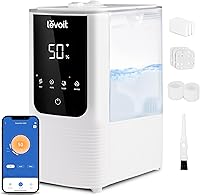
The Levoit NeoClassic 650S is an ultrasonic cool-mist model rated for rooms up to 536 sq ft. It has a top-fill design, a 6.2 L tank, and Auto Mode, making it a fit for a separate bedroom or other room within that coverage.
Pick it when you want a dedicated room unit with app and voice control. Skip it if you prefer evaporative humidification, want a whole-home unit, or don't want to follow the care instructions for its water-contact parts.
The Levoit OasisMist 1000S is an ultrasonic cool-mist model rated for up to 600 sq ft. Its 10 L tank, top-fill opening, app scheduling, and 100-hour maximum runtime suit a larger bedroom or connected room area when the rated coverage matches the space.
Choose it if you want a tower-style room humidifier with scheduling and a large tank. Skip it if you need to humidify rooms separated by closed doors, or want an evaporative model that uses a wick filter.
More units also mean more filling, cleaning, and settings to manage. Choose the smallest number that keeps the rooms you use within your chosen humidity range.
How do you tell whether another humidifier is needed?
Add another unit only after checking humidity in the room the first unit may not be reaching. A separate meter helps you compare rooms instead of relying on the reading beside the humidifier.
Place a hygrometer away from the humidifier’s direct output, windows, and obvious sources of heat or moisture. Check it at different times and with doors in their usual positions, since a room’s reading can change with the home’s routine.
The Govee H5075 is a tabletop thermometer and hygrometer with a display, Bluetooth app monitoring, humidity alerts, and recorded readings. Its Bluetooth connection is intended for monitoring within range, so use the display or place it in the room you want to check.
Choose it if you want to check several rooms and review humidity changes over time. Skip it if you only need a basic reading in one place and don't need app alerts or stored data.
If one room remains low while another is already comfortable, move the unit closer or add a room-sized model where needed. Don't raise output across the whole home to solve a reading in one closed bedroom.
What humidity should you aim for?
Aim for a comfortable indoor level without condensation or damp surfaces. Use a meter to guide adjustments, and lower the setting or pause a unit if moisture appears on windows or furniture.
Read what humidity should be in a house for practical ranges and signs that the air may be too damp. A humidifier’s built-in control measures conditions near the unit, so a separate hygrometer can help you check a bedroom or area farther away.
Start at a moderate output and observe the room before increasing it. Running several units at high output without checking readings can make the home damp and add cleaning work without helping the rooms that need it.
Where should you place each humidifier?
Place each humidifier in the room it needs to serve, with space around it. Follow the model’s placement instructions and keep the unit away from surfaces that could get damp.
Avoid hiding a unit behind furniture or putting it where a wall or closed door blocks airflow. For bedroom setup ideas, see where to put a humidifier in a bedroom.
After the first few hours, check the nearby floor, furniture, and windows. If you see moisture, adjust the placement or lower the output, then recheck humidity in the room.
How do you set up and care for multiple humidifiers?
Set up each unit in its intended room, fill it according to its instructions, and choose a moderate setting before you leave it running. Keep track of which unit serves which room so you can compare readings and remember care needs.
Follow each model’s manual for cleaning and filter care. A large evaporative model may use a replaceable wick, while ultrasonic models have water-contact parts that need regular attention.
The Levoit Superior 6000S wick filter is intended for use for 3 to 6 months, depending on environment and water quality. Clean the unit as directed, and replace the wick when its condition or the manufacturer’s instructions call for it.
Read how often to clean a humidifier for a practical maintenance routine, and how to raise humidity in a house for other ways to address dry indoor air. If you use more than one unit, a simple calendar reminder for each one can help keep maintenance from slipping.
What mistakes can lead you to buy too many humidifiers?
The most common mistake is counting rooms before checking humidity and airflow. A home with several rooms may need only one unit in a connected open area, while a smaller home may need separate units for closed rooms.
Avoid these common missteps:
- Buying by total square footage alone. Compare the coverage with the connected space each unit will serve.
- Assuming hallway humidity represents a closed bedroom. Measure the room with the door in its usual position.
- Placing a humidifier in a blocked corner. Give air room to move around the unit.
- Running every unit at full output. Start lower and check for condensation or damp surfaces.
- Ignoring upkeep. Each extra humidifier adds refills, cleaning, and possibly filter care.
- Treating a built-in sensor as a whole-home reading. Compare distant rooms with a separate hygrometer.
A second unit should solve a measured problem, such as a bedroom that stays low despite suitable humidity in the open area outside it. If readings are already comfortable throughout the home, another humidifier adds work without a clear need.
How many humidifiers do I need? Use this decision rule
For how many humidifiers you need, start with one unit for each separate area that consistently needs more moisture. Use one larger model when the rooms are connected and its coverage fits; choose separate room units when doors, floors, or distance keep humidity from spreading.
If only one bedroom needs help, choose a room-sized model. If a large open area needs coverage, consider a whole-home evaporative unit, then check readings at the far end.
If you're unsure whether more coverage is needed, measure first with a hygrometer and add a unit only where the readings support it.
Frequently asked questions
How many humidifiers do I need for a 2,000 sq ft house?
Start with the rooms where humidity is low, then compare their connected floor area with a humidifier’s stated coverage. A single whole-home model may suit an open layout if its rated area is large enough, while closed bedrooms or separate floors may need separate units.
Check readings in each area before adding another.
Can one humidifier cover multiple rooms?
One humidifier may cover connected rooms when its rated coverage fits their combined area and air can move between them. Walls, closed doors and separate floors can limit how evenly moisture spreads, so measure humidity where you spend time instead of assuming one room’s reading applies to the whole house.
Should I put a humidifier in every bedroom?
You don’t need a humidifier in every bedroom by default. Check the humidity in each room, especially with doors closed, and add a unit where readings remain low and the room needs more moisture.
Choose a model whose stated room coverage suits that bedroom.
Can too many humidifiers make a house too damp?
Yes, several units can add more moisture than a home needs if they run without monitoring. Use a hygrometer in occupied areas and adjust or stop a unit when humidity rises too high.
Follow the humidifier’s instructions and check for condensation around windows or on nearby surfaces.
Does a larger humidifier mean I need fewer units?
A larger coverage rating can reduce the number of units in an open area, but it doesn’t guarantee even humidity through closed rooms or across floors. Compare the rating with the connected space, then check readings in separate rooms to see whether another unit is useful.