How to Raise Humidity in Your House
To raise humidity in your house, measure the room first, then use a humidifier or small moisture sources while watching for condensation. Keep indoor humidity in a comfortable range and lower it if windows or walls become damp.
On this page (7 sections)
- How do you raise humidity in a house safely?
- Should you use a humidifier to raise humidity?
- How can you raise humidity without a humidifier?
- Where should you place a humidifier?
- How many humidifiers does a house need?
- What should you do if the house gets too humid?
- What's the best way to raise humidity in your house?
To raise humidity in your house, measure the room, add moisture in a controlled way, and watch for condensation. A humidifier is the most direct option; smaller steps like drying laundry indoors may help in one room but are harder to control.
Start with a hygrometer instead of guessing. A room can feel dry while its humidity is already suitable, and adding more moisture can leave windows or walls damp.
How do you raise humidity in a house safely?
Use a humidifier to add moisture gradually, then check the room again. Aim for a comfortable indoor range and adjust the setting if you see condensation or damp surfaces.
If you don't own a hygrometer, the TempPro TP50 Hygrometer measures humidity and temperature, shows a dry, comfort, or wet indicator, and records high and low readings.
Place the meter where you spend time, away from the humidifier's mist, exterior doors, and direct sunlight. Let it settle before changing settings, then check the reading again later.
Our guide to what humidity should be in a house explains how to interpret room readings. If your goal is a specific device setting, see what to set a humidifier to.
Can everyday activities add moisture to the air?
Yes, some indoor activities release moisture, but the effect is local and difficult to measure. Drying laundry indoors or leaving a bathroom door open after a shower can add moisture to nearby air.
Use these methods only when the room stays dry. If you see water on windows, walls, or furniture, stop adding moisture and ventilate the space.
Cooking also releases water vapor, but it shouldn't replace a range hood or safe kitchen ventilation. Don't boil water unattended to humidify a room.
Should you use a humidifier to raise humidity?
A humidifier gives you more control than everyday moisture sources. Choose a type and capacity that suit the room, and follow its manual for operation, water, and cleaning.
An ultrasonic humidifier creates a visible mist, while an evaporative model uses a wick and fan to move moisture into the air without visible mist. Compare the main options in our guide to types of humidifiers for home.
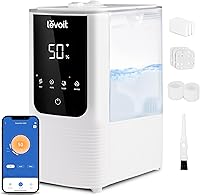
The Levoit OasisMist 1000S has a 10 L tank, top-fill opening, app schedules, and a stated coverage area up to 600 sq ft.
Choose it if you want app scheduling and a large tank. Its coverage claim may not fit every floor plan, so measure the room and account for open doorways and airflow.
The DREO HM524S 6L Smart has a 6 L tank, top-fill design, app controls, and a stated coverage area up to 500 sq ft.
Choose it if you want to check humidity and change settings through an app. It offers auto, manual, and sleep modes, and up to 60 hours of runtime in sleep mode.
Does an evaporative humidifier make sense for a whole house?
An evaporative humidifier can suit a large open area when you prefer mist-free operation. Check its coverage against the space you want to humidify, and remember that walls and closed doors limit how moisture moves.
The Vornado Evap40 uses two wicking filters, has a built-in adjustable humidistat, and is rated for spaces up to 1,000 sq ft.
Its coverage figure doesn't mean one unit will control humidity evenly across a multi-room house. For separate rooms or floors, consider individual room needs and the path of air between them.
How can you raise humidity without a humidifier?
Try small moisture sources only when you can monitor the result. They can help one room, but they won't give you the same control as a humidifier with a humidity setting.
You can dry a load of laundry indoors or leave the bathroom door open after a shower. Don't hang wet laundry where it blocks a heater, creates a trip hazard, or keeps a wall damp.
Keep houseplants if you enjoy them, but don't count on them to raise humidity across a whole home. Avoid leaving bowls of water near children, pets, electronics, or walkways.
If a room stays dry despite these steps, measure it and consider a humidifier sized for that space. A meter helps you avoid adding moisture when it's not needed.
Where should you place a humidifier?
Place a humidifier on a stable, level surface with space around it. Keep mist away from walls, curtains, electronics, and surfaces that could become wet.
The exact placement depends on the room layout and the humidifier's manual. Our guide to where to put a humidifier in a bedroom covers clearance and common placement mistakes.
Keep cords out of walking paths and the unit out of reach of children and pets. Don't set it on a soft surface or where a spill could damage flooring.
How many humidifiers does a house need?
The number depends on your room layout, airflow, and the area each unit can serve. A single unit may work in an open space, while closed rooms or separate floors can need separate devices.
Start with the rooms where you spend the most time and measure each one. If a hallway unit doesn't change the reading in a closed bedroom, placing a suitable unit in the bedroom may be more effective.
Use the guide to how many humidifiers a house needs to think through rooms, floors, and device coverage. Don't add multiple units before you know where humidity is low.
What should you do if the house gets too humid?
Turn down or switch off the humidifier if condensation or dampness appears. Check the hygrometer, wipe wet surfaces, and let the room dry before adding moisture again.
Moisture on windows can form when warm, humid air meets a cold surface. Improve ventilation when practical and avoid directing mist toward windows or exterior walls.
Clean the humidifier on the schedule in its manual, and use the water it recommends. For water choices, read whether you need distilled water in a humidifier; for care, see how often to clean a humidifier.
What's the best way to raise humidity in your house?
Measure first, then choose the smallest change that solves the problem. Use a humidifier for steady, adjustable moisture, or try a small household source if you can monitor the room and keep surfaces dry.
Choose the Levoit OasisMist 1000S if a large tank and app schedules fit your routine. Choose the DREO HM524S for app-based room adjustments, or the Vornado Evap40 for evaporative operation in a larger open area.
If you aren't sure what level to aim for, start with what humidity should be in your house and use a hygrometer to guide changes.
Frequently asked questions
What is the fastest way to raise humidity in a house?
A humidifier is usually the most direct way to add moisture to indoor air. Measure the room first, set the device within a suitable range, and check nearby windows and surfaces for condensation as humidity rises.
A larger house may need more than one unit, depending on room layout and airflow.
How can I raise humidity without a humidifier?
You can let laundry dry indoors or keep bathroom doors open after a shower, if the extra moisture doesn't cause condensation or dampness. These methods are less controlled than a humidifier, so use a hygrometer and stop if windows, walls, or fabrics feel wet.
Can houseplants raise indoor humidity?
Plants release some moisture into the air, but a few plants are unlikely to raise humidity throughout a whole house by much. Treat them as a small contribution, not a substitute for measuring the room or using a humidifier when readings stay low.
How do I know if my house is too humid?
A hygrometer helps you track indoor humidity, while condensation on windows, damp surfaces, and musty odors can signal excess moisture. Check more than one room, especially near exterior walls, and reduce humidifier output if moisture keeps appearing.